Navigating Tree Removal Access Issues in DeLand
When a tree comes down in a storm or shows signs of decay, the first thing most people think about is the cost or the size of the tree. But after years of working in DeLand and the surrounding parts of Florida, I have learned that the real challenge often starts before a single branch hits the ground. It is not about the tree itself. It is about how you get to it. Tree removal access issues can turn a straightforward job into a complicated puzzle, and understanding them early makes all the difference.
I have seen it happen time and again. A homeowner calls about a large oak leaning toward the house, and we schedule a site assessment. Dan arrives on site, walks the property, and the first thing he checks is not the tree but the path to it. Can the bucket truck fit through the gate? Is there enough overhead clearance for the crane truck? Is the ground solid enough to support the weight of a chipper and a stump grinder? These are the questions that determine whether the job takes half a day or two days, and whether it costs what the homeowner expected or significantly more.
What Creates Tree Removal Access Issues
Access problems come in many forms. The most common one in older DeLand neighborhoods is the narrow driveway. Many homes were built when cars were smaller and trees were not a concern. A driveway that was perfectly fine for a sedan becomes a tight squeeze for a bucket truck with outriggers. Even if the truck can get through, there may not be room to maneuver around the corner of the house. I have had jobs where we had to park the crane truck on the street and run cables across the yard just to reach the tree. That adds time and coordination, especially when power lines run overhead.
Another frequent issue is the fence line. Properties in Florida often have fenced backyards, sometimes with a gate that is too narrow for equipment. If the tree is near that fence line, we have to decide whether to take the fence down temporarily or work around it. Taking down a section of fence is sometimes faster and safer than trying to feed a chipper through a three-foot opening. But that means coordinating with the homeowner, and sometimes with the neighbor if the fence is shared. That kind of planning is part of the site assessment, and it is exactly the kind of detail that can turn a routine removal into a logistical exercise.
The Role of Equipment and Experience
Different trees call for different tools. A tall, dead pine near a house might require a crane truck to lift sections out, especially if there is no room to drop the tree whole. A tree that is accessible from the driveway might only need a bucket truck and a chainsaw. But when tree removal access issues arise, the equipment list changes. If the bucket truck cannot reach the tree because of a low-hanging branch or a narrow gate, we might rely on climbing gear and hand rigging. That is slower and more labor-intensive, but it is sometimes the only safe way.
The same logic applies to cleanup. A chipper needs to be close enough to the work area to keep the operation efficient. If the chipper has to sit on the street because the driveway is too tight, the crew ends up hauling brush a long distance. That adds time and fatigue. A stump grinder also needs a clear path. If the stump is behind a fence or in a tight corner, the grinder might not fit. Then the stump has to be dug out by hand, or we need to bring in a smaller unit. These are the details that a good site assessment catches before the crew arrives.
Permits and Property Boundaries
DeLand has specific regulations about tree removal, especially for larger trees and those near property boundaries. A city permit is often required before work can begin, and the permit process can be affected by access concerns. For example, if the tree is close to the property line, the city may require a survey to confirm that the tree is not a boundary tree shared with a neighbor. That survey can take time and delay the job. Similarly, if the tree is near a roadway or a sidewalk, the city may have rules about how the equipment can be positioned and whether the street can be closed. These are not just bureaucratic hurdles. They are safety measures that protect the community and the crew.
I have worked on jobs where the homeowner did not realize their tree was on the neighbor's side of the property boundary. That creates a whole separate set of tree removal access issues, because now you need permission from two parties. The site assessment should include a check of the property lines, but it is not always obvious from the ground. Sometimes we have to rely on old surveys or even plat maps to figure out who owns the tree. That kind of detective work is part of the job, but it is easier when the homeowner is prepared.
Emergency Service Considerations
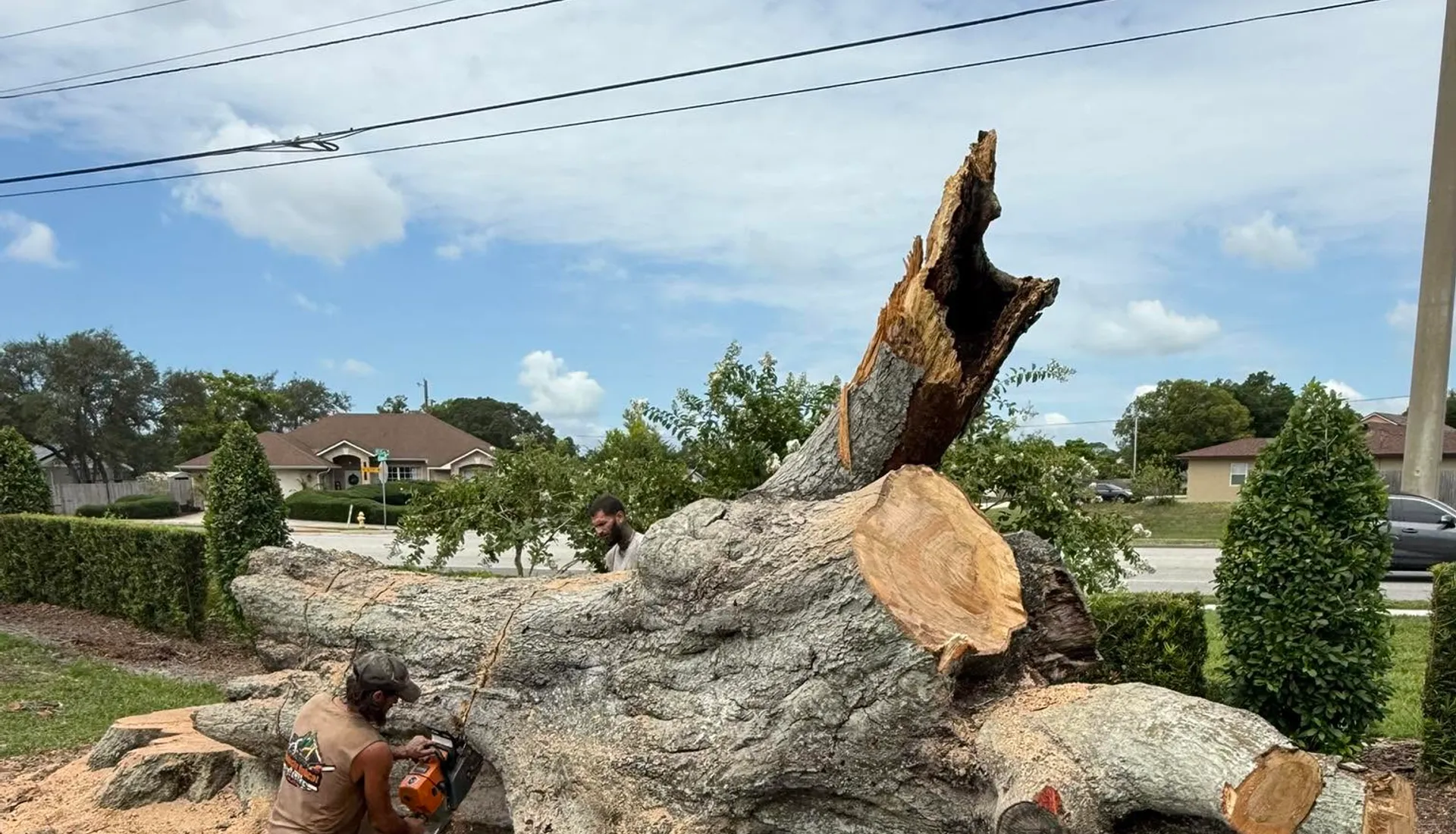
Storms in Florida are not a matter of if but when. When a hurricane or a severe thunderstorm rolls through DeLand, emergency service calls spike. Trees come down on houses, cars, and power lines. In those situations, access issues become critical. A blocked driveway might prevent a fire truck from reaching a house. A fallen tree across a road might cut off a neighborhood. The emergency service crew has to prioritize based on safety and access. They will clear the road first, then move to houses that are at risk. If a tree has fallen on a home but the driveway is blocked by debris, the crew might need to clear a path before they can even assess the damage.
I remember a job after a storm where a large live oak had fallen across a driveway and was leaning on the roof. The homeowner was inside and safe, but the tree was pressing on the structure. The problem was that the driveway was lined with power lines that had been knocked down. We could not bring in a crane truck or a bucket truck until the utility company had made the lines safe. That took hours. In the meantime, we used chainsaws to remove branches that were not near the lines, just to reduce the weight on the roof. That kind of improvisation is common in emergency work, and it is driven entirely by access constraints.
Planning Ahead with a Site Assessment
The best way to avoid surprises is to schedule a thorough site assessment before any work begins. A professional arborist or tree service will walk the property, measure distances, check for underground utilities, and note any overhead clearance issues. They will also look at the ground condition. Soft ground after rain can make it impossible to bring in heavy equipment without sinking. In Florida, sandy soil is common, but it can still become muddy after a storm. A site assessment will flag these concerns and allow the crew to bring the right equipment or adjust the approach.
Homeowners can also help by clearing the path. Moving vehicles, trimming low branches, and making sure gates are wide enough can make a big difference. If you know the gate is only four feet wide, measure the equipment that will be coming. A bucket truck might be seven feet wide. That means the gate needs to be modified, or the truck will have to stay on the street. These are simple things, but they are often overlooked until the crew arrives and the tree removal access issues become obvious.
In the end, tree removal in DeLand and across Florida is about more than just cutting wood. It is about planning, communication, and understanding the physical constraints of a property. The equipment is important, and experience matters. But the single biggest factor in a smooth job is anticipating access problems before they happen. A good site assessment and a little preparation can turn a stressful situation into a manageable one. And when the next storm rolls in, that preparation can make all the difference between a quick recovery and a long, frustrating wait.